Under Construction
CYBER Logo
DUBLIN'S DIGITAL UNDERGROUND SINCE 1998!
WELCOME TO CYBER INTERNET CAFE -- SURF THE WORLD WIDE WEB AT BLAZING SPEEDS! -- DRINKS AND SNACKS AVAILABLE! -- PLAY COUNTER-STRIKE AND QUAKE OVER OUR LOCAL LAN NETWORK! -- FEATURING 6 COLORFUL IMAC G3 TERMINALS AND 4 HIGH-POWER GAMING PCS! -- PLAY PLAYSTATION, NINTENDO 64, AND DREAMCAST IN THE LOUNGE AREA!
INFORMATION:
<24/05/26 03:22 PM GMT>
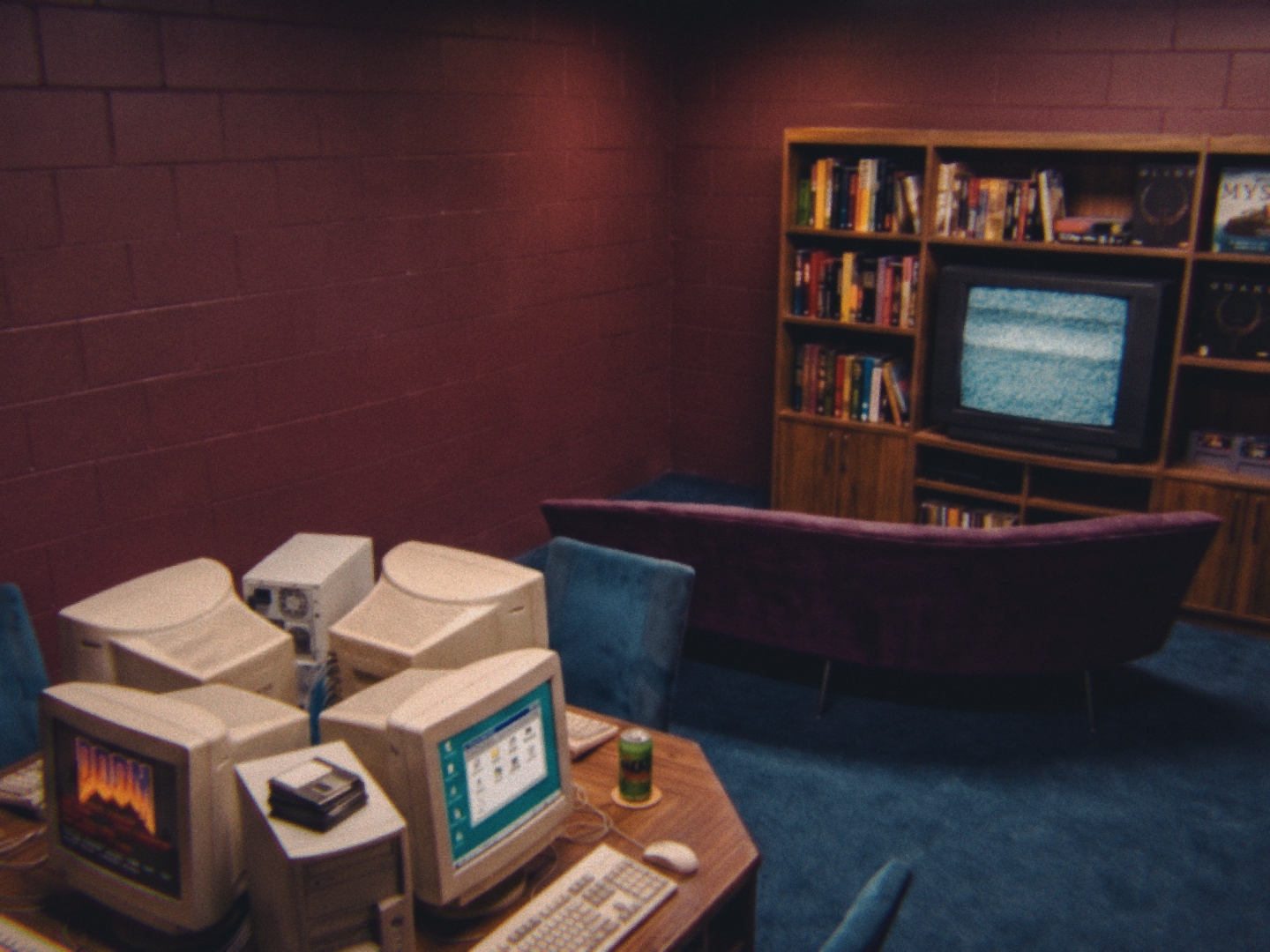
CYBER is a site-specific immersive installation that recreates a late-1990s internet café. Set in a basement that isolates visitors from the contemporary world, a reception desk anchors the entrance, while a lounge area with a couch invites visitors to watch TV, play console games, or browse books from the period. The space is divided into two zones by a partition that provides privacy and reduces noise: a web browsing area for individual use, and a circular LAN gaming area for shared play. Period devices run on a simulated "legacy internet" powered by the Internet Archive, offering a near-authentic encounter with early online culture. Densely cluttered and over-decorated with posters and memorabilia, the compact layout encourages close proximity and social interaction, reflecting the tactile, communal nature of digital life at the end of the 20th century.

[ NEXT ]

All links and banners came from the internet. If anyone wishes to have their links or artwork removed from this page send an e-mail to the webmaster and we will gladly remove it.
Please support Geocities and the Internet Link Exchange. They help keep the net what it was meant to be, a free source of information.

Concept

The installation examines how contemporary users encounter an earlier internet, foregrounding friction between past and present modes of access. By reintroducing latency, constrained interfaces, and spatially bounded terminals, CYBER produces temporal dissonance in which familiar technologies operate under unfamiliar conditions. Slowness is treated not as limitation but as an interpretive condition, where waiting and partial access become part of experience. Visitors engage with archived websites, forums, and news from the late 1990s and early 2000s as active environments rather than static records. This produces a double reading in which content is legible yet estranged, with materials that persist alongside fragments that degrade or fail, resulting in a partial archive rather than a complete reconstruction.

The work draws on digital media archaeology to engage obsolete systems through operational logic rather than aesthetic residue. It treats the internet café as a mediated public interface where access was physically situated and socially visible. Its reconstruction highlights the shift from shared terminals to individualised, continuous connectivity and the abstraction of access into personal devices. At the level of experience, CYBER is concerned with attention and friction. Contemporary network culture is defined by immediacy and seamless interaction. The installation disrupts this through delay, fragmentation, and manual navigation, shifting interaction from efficiency to exploration.

It also engages technological acceleration and Moore's Law as both technical framework and cultural narrative, using a materially constrained environment to contrast past computational limits with present expectations of instant response. This reframes speed and capacity as cultural rather than purely technical values. Memory and historicity remain central tensions. The late 1990s internet is presented as fragmented and uneven rather than coherent, with archived forums and period news exposing unmoderated and volatile discourse that resists nostalgic simplification. Nostalgia is positioned as a constructed and unstable relation to the past. Finally, digital experience is framed as spatial practice, with the internet understood as materially situated within cafés, terminals, and shared environments where architecture, hardware, and network conditions structured behaviour rather than as a disembodied informational space.

Contextualisation

CYBER is situated within the late Web 1.0 period, when internet access was concentrated in cafés, libraries, and institutions rather than embedded in personal devices. These sites operated as access points to networked culture and shaped early forms of navigation, communication, and identity. The installation approaches this period as transitional, defying stable categorisation, defined by shifting technologies and emerging interface conventions. It draws on digital media archaeology to examine these transitional systems through their operational conditions, reconstructing constraints such as limited bandwidth, shared terminals, and early interface structures to foreground how technical limitations shaped access and use.

In parallel, it aligns with critical spatial practice by focusing on the role of physical environments in structuring digital experience. The internet café is treated as a hybrid setting where different modes of social behaviour coexisted within a shared technical infrastructure. Its reconstruction highlights how spatial organisation once shaped access in ways that differ from today's individualised connectivity. The installation also responds to the shift from situated access to continuous connectivity. Earlier use required movement into specific locations and engagement with fixed terminals. This contrasts with contemporary conditions of constant availability, where the friction of physical travel to a fixed terminal has been erased. CYBER reintroduces spatial and temporal boundaries to make this transition perceptible, positioning the internet as a situated environment rather than an ambient utility.

Although it references familiar 1990s visual systems such as CRT displays and early interfaces, these are not used as stylistic markers but embedded within functional constraints that reproduce conditions such as delay, fragmentation, and limited navigation, grounding the work in operational difference rather than aesthetic reference. The use of archived forums and period news introduces material shaped by unmoderated and uneven discourse, resisting simplified readings of the early internet as coherent or idealised and positioning the archive as incomplete and contested rather than neutral. Nostalgia is treated as a constructed relation to the past rather than a stable perspective, acknowledged and interrupted through exposure to infrastructural limits and social complexity.

Overall, CYBER frames early internet culture as an environment produced through the interaction of hardware, architecture, and social practice. Reconstructing these conditions makes visible the specificity of contemporary networked experience and the infrastructural decisions that continue to shape it.

Site

CYBER requires an institutional context able to support the critical and political tensions embedded in the work. As it draws on archived forums and period news, the venue should be committed to critical and socially engaged practice rather than presenting digital history as heritage or nostalgia. In Dublin, Project Arts Centre and IMMA are suitable contexts, both supporting experimental, time-based, and conceptually driven work, and providing an audience aligned with participatory and critical practice.

The installation is designed for a medium-to-small gallery space of around 50 square metres. This compact scale reflects the density of late 1990s internet cafés, which prioritised maximum occupancy over comfort. Spatial compression is central to the work, creating enclosure and proximity that contrasts with contemporary dispersed and individualised internet use.

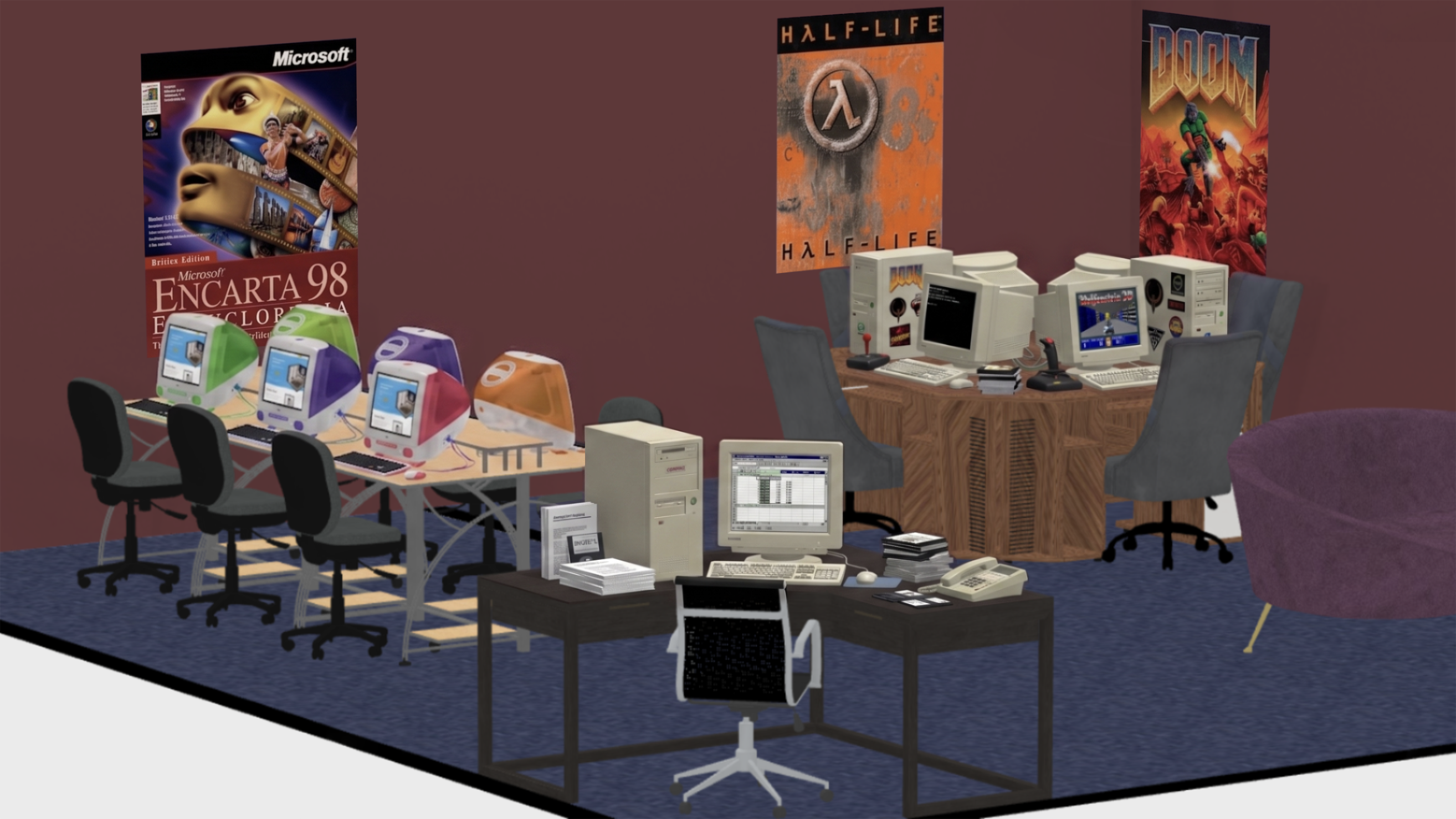
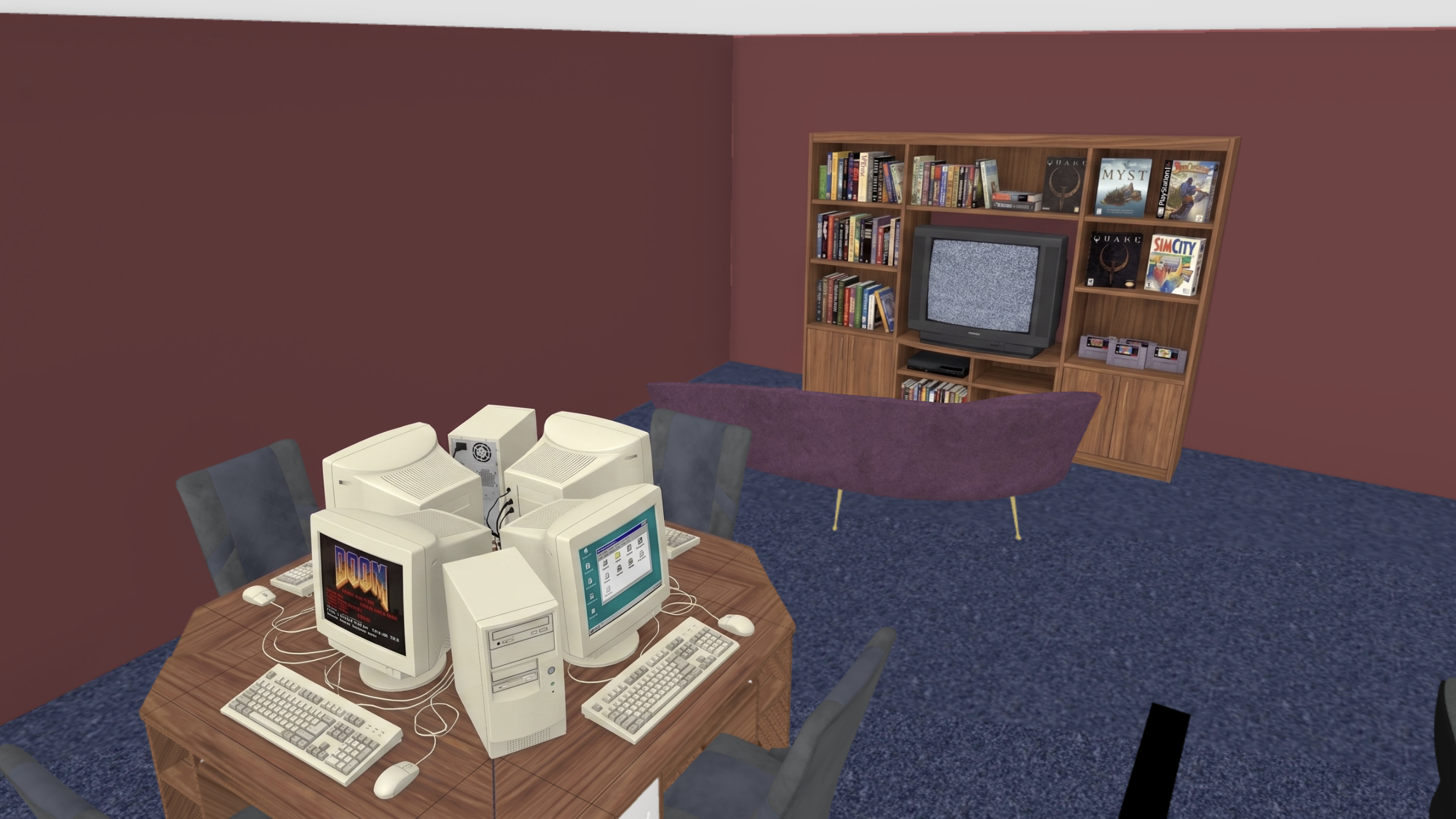
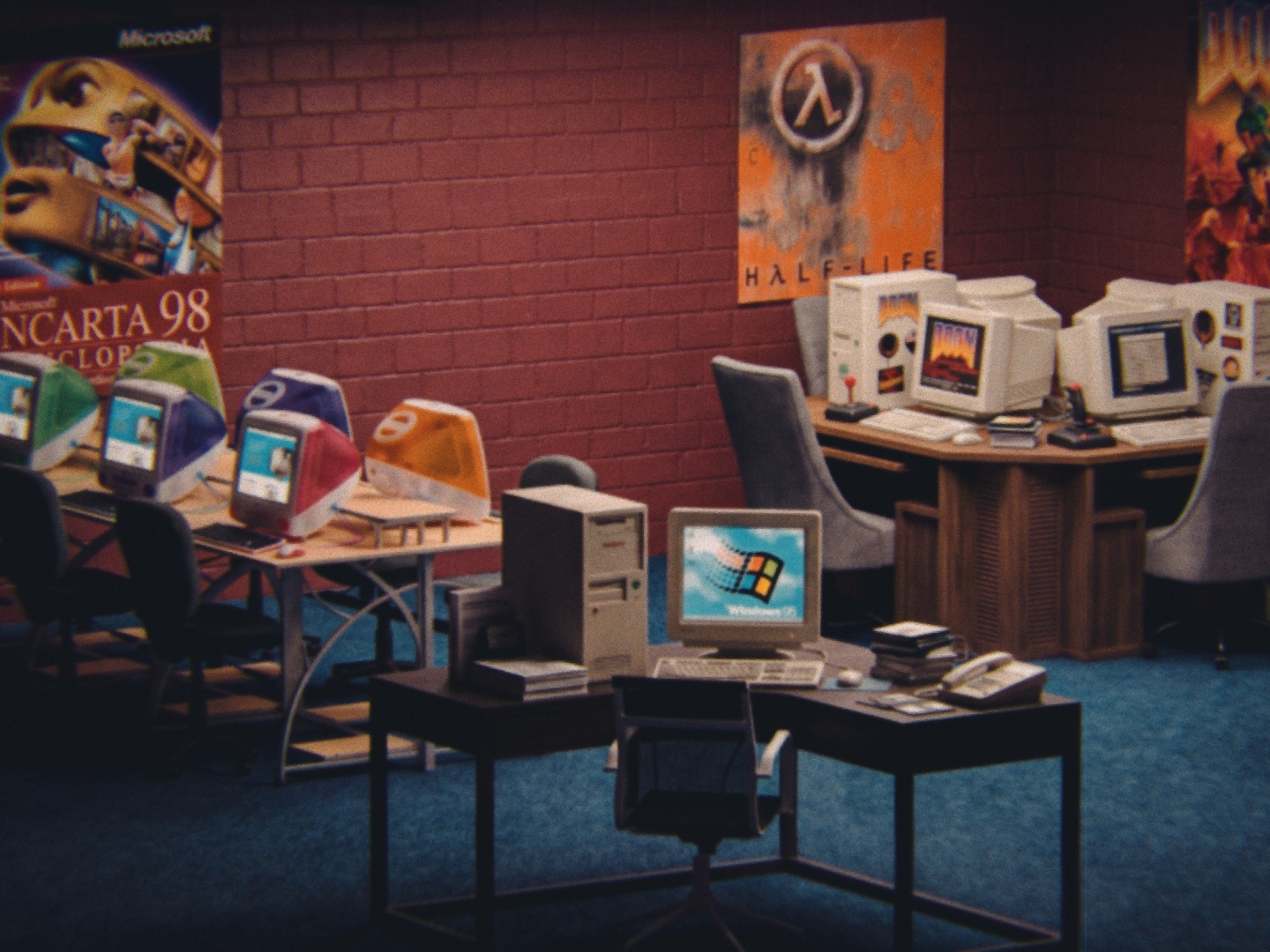
The space is organised into three zones: a lounge with CRT television, VHS player, consoles, board games, and printed material; a browsing area with six iMac G3 stations arranged at partitioned desks; and a circular LAN gaming area with four PCs running Quake and Counter-Strike. The interior uses red brick, dark blue carpet, and dense layering of period posters, memorabilia, and collectibles to reinforce the visual and spatial logic of the era.

Audience

CYBER is designed for a broad, mixed audience, with particular relevance for those engaged with digital technologies, urban culture, and media art. It addresses both users with direct experience of late 1990s internet culture and younger visitors who encounter it mainly through cultural references, aesthetic revivals, and retrospective accounts. For those with lived experience, the installation enables a critical re-encounter that combines recognition with defamiliarisation, using archived forums and period news to reintroduce the complexity, friction, and social unevenness often softened by selective memory. For younger audiences, it operates as an experiential introduction to a distinct digital environment shaped by different technical constraints, interface logics, and forms of social interaction, rather than a purely historical overview.

The work also engages audiences in art, design, and critical media practices, including students, researchers, and practitioners, for whom it functions as both installation and research-led spatial intervention. By bringing together these different groups within the same environment, CYBER supports multiple modes of interpretation, ranging from immersive and exploratory engagement to more analytical and reflective reading. The coexistence of these audiences within a shared space also reflects how digital history is unevenly transmitted, mediated, and reinterpreted across generations.

Methodology

The browsing stations will use one of two configurations. The first will use original iMac G3 machines running Mac OS 9 over wired Ethernet for period accuracy. The second will embed modern mini PCs inside iMac G3 shells, emulating Mac OS 9 and preserving CRT output via scan conversion, prioritising stability while maintaining visual authenticity.

The gaming setup will follow a similar balance between authenticity and reliability. Native Windows 98 SE on period hardware may be explored but presents stability risks in a public context. Alternatively, modern PCs will run Counter-Strike 1.6 and Quake natively or through lightweight compatibility layers, using a retro Windows 98 style interface.

All systems will operate on a fully isolated local network with no external internet access. A central server will manage DNS, DHCP, NTP, and logging, while web access will be routed through a local proxy connected to the Wayback Machine, with Protoweb as a possible backup for additional archived content.

The browsing stations will access only archived web pages from a defined historical window, including forums, news sites, and GeoCities content, with no live web access. The gaming network will be separated from browsing via VLANs but remain on the same LAN, with one machine acting as a local server for titles such as Counter-Strike 1.6 and Quake, replicating late 1990s LAN café configurations.

Team

CYBER requires a team covering curation, spatial design, technical systems, archival work, and installation support. This includes a lead artist working with an institutional advisor for curatorial framing, production and set designers with experience in immersive environments, and researchers sourcing and verifying period objects such as consoles, posters, and memorabilia. The technical core requires systems engineers to build the network and proxy infrastructure, hardware specialists to restore legacy machines, software developers to configure emulation and the retro interface, and AV technicians for lounge systems. Archival and legal specialists handle retrieval and rights clearance of web content, supported by gallery technicians for installation and maintenance and accessibility consultants to ensure inclusive design.

Visualisation

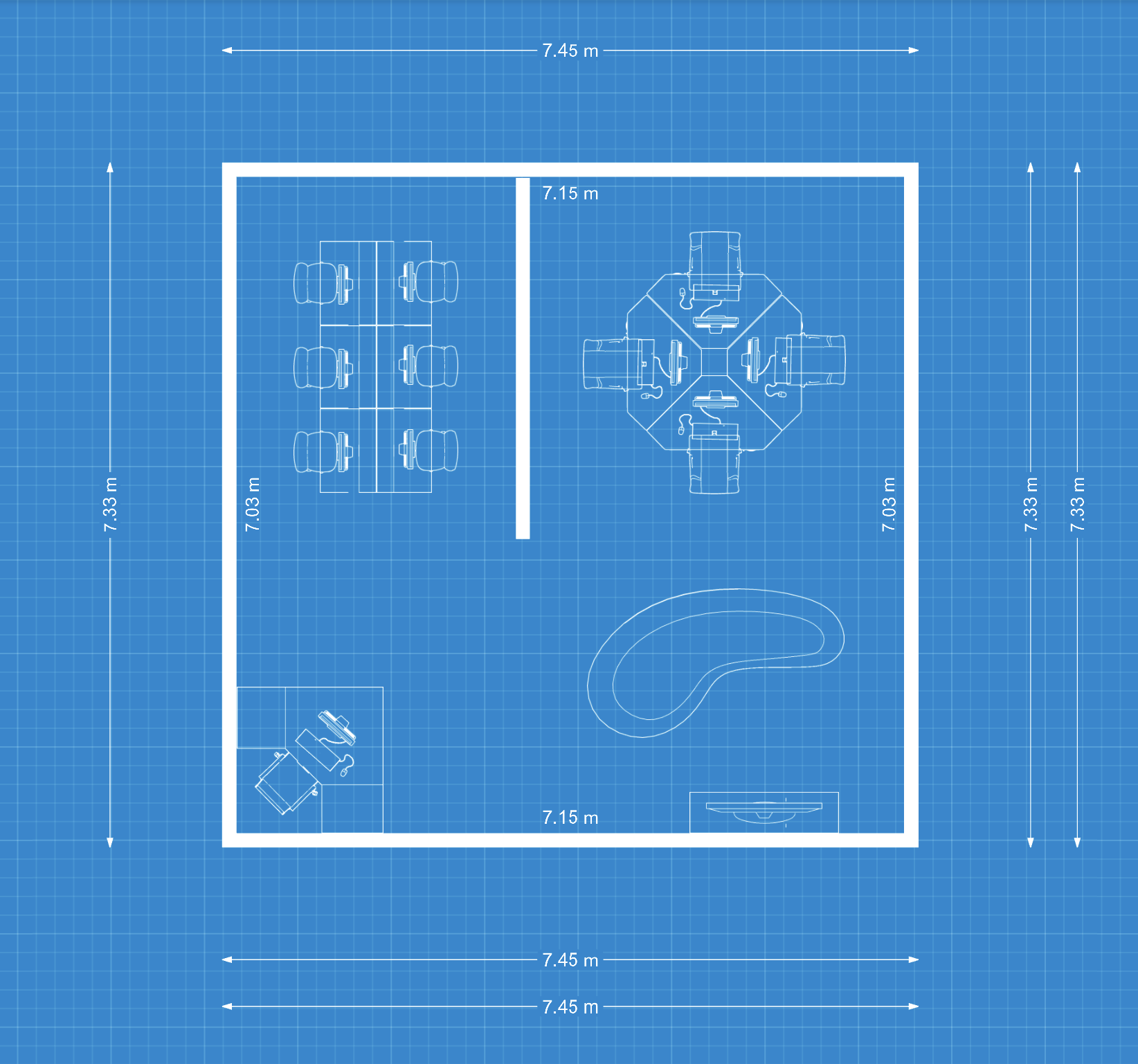
This sequence of images maps the installation space as a compressed reconstruction of a late 1990s internet café environment, translating spatial and experiential qualities through successive stages of abstraction and simulation.

The technical blueprint defines the spatial logic of the gallery on a blue grid, establishing circulation and programme. A linear row of six partitioned browsing stations is positioned along the left side, while a circular LAN gaming configuration anchors the right. A lounge area is located in the lower right corner, completing the spatial organisation.

Timeline

Phase 1: Development and planning establishes the conceptual and institutional groundwork. This includes securing a venue (such as Project Arts Centre or IMMA), defining critical framing, setting budgets and timelines, and completing legal and rights scoping for archived forums, news, and branded material. An accessibility consultant is engaged early to embed inclusion requirements from the outset.

Phase 2: Team assembly and R&D covers research and prototyping. The team is contracted, hardware sourcing begins (iMac G3s, CRTs, consoles, PC components), and the network architecture is tested in a studio setting. The digital archivist defines the web retrieval window and tests Wayback Machine and Protoweb integration. OS environments, emulation systems, and the retro gaming interface are developed, alongside sourcing of props and memorabilia.

Phase 3: Spatial and technical build is the main production phase. The set is constructed and furnished, and all hardware is installed into the isolated LAN. The server is configured for DNS, DHCP, NTP, and logging. Browsing stations are routed through the archival proxy, gaming systems are configured for LAN play, and VLAN separation is implemented. The space is fully dressed with period materials.

Phase 4: Installation and testing takes place on site. Systems are integrated, stress tested under simulated public use, and staff are trained. Accessibility walkthroughs and preview testing are completed before opening.

Phase 5: Public exhibition run involves daily monitoring, maintenance, and invigilation. Talks or public programming may run alongside the exhibition. Documentation of system performance and audience interaction is recorded. Deinstallation concludes the project.

RESOURCES:
[ HARDWARE ]
  • 1 central server (handling network services and archival proxy)
  • 6 iMac G3 units
  • 4 gaming PCs
  • CRT television
  • VHS player
  • PlayStation 1, Nintendo 64, or Dreamcast
  • Physical media (tapes, discs, and cartridges)
[ NETWORKING ]
  • Managed switches with VLAN support
  • Structured Ethernet cabling across all zones
  • Isolated local area network (no public internet access)
  • Wayback Machine proxy server for archival web access
  • DNS, DHCP, and NTP services hosted on central server
[ SOFTWARE ]
  • Mac OS 9 and Windows 98 emulators
  • Custom frontend style for Windows 11
  • Counter-Strike 1.6 and Quake configured for LAN multiplayer
  • Wayback Machine / Protoweb
[ PROPS & MEDIA ]
  • Period posters
  • Collectible figures
  • Board games
  • Magazines and printed material
[ SPATIAL ELEMENTS ]
  • Red brick wall finish or treatment
  • Patterned dark blue carpet
  • Partitioned desk systems for browsing stations
  • Circular LAN gaming configuration
  • Lounge seating area and reception desk

Practical Concerns

The realisation of CYBER depends on technical reliability that is difficult to guarantee due to the instability of legacy systems and archival infrastructures. Browser emulation and proxy-based access to archived content introduce failures such as broken formatting, missing scripts, and incomplete or non-functional pages. As a result, the system requires extensive pre-opening testing under simulated public use and ongoing monitoring during exhibition.

Maintenance is a core part of the work. Network, server, and terminal performance must be checked daily, with routine resets and repairs. This requires trained technical staff and access to specialist support. Even with a hybrid approach using emulation and restored hardware, risks remain, including software crashes, compatibility issues, and hardware degradation.

The installation is also exposed to physical wear due to direct interaction with equipment and objects. Damage, loss, and malfunction are realistic concerns. Protective strategies such as reinforcement, controlled access, and selective use of replicas are required. Invigilation must remain present but discreet to support both operation and immersion.